Follow the operating lifecycle
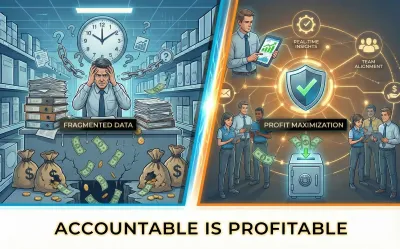
Small errors can recur across purchasing, receiving, pricing, inventory, and checkout. Accountability means a recorded decision, an owner for the exception, and a way to confirm that it was resolved. It also means separating a possible benefit from a measured result.
Five areas to investigate
1. Receiving and invoices
Compare ordered, delivered, invoiced, and paid quantities. Track short deliveries, cost differences, allowances, and supplier credits. A receiving workflow provides records for that review.
2. Price changes
Measure the time between a confirmed cost change and an approved shelf and checkout price. Estimate the effect using units actually sold during the delay.
3. Inventory
Separate spoilage, damage, unexplained shrink, and excess stock. Inventory carrying value is capital tied up; it is not automatically an expense or recoverable profit.
4. Labor
Compare scheduled hours, recorded time, and service demand. Time records and manager approvals support review; staffing decisions still need operational judgment.
5. Checkout exceptions
Review refunds, voids, discounts, and price overrides in context. An exception is a prompt to investigate, not evidence of theft.
Use a financial bridge
For an illustrative store with $10 million in sales and an assumed 1.7% net margin, starting net profit is $170,000. If an operational change prevents $20,000 of previously incurred expense and costs $8,000 to operate, the modeled improvement is $12,000 before taxes and other changes—about 7.1% of the starting profit.
A sales opportunity is different. An extra $20,000 of sales contributes only its incremental margin after product and operating costs. Releasing $20,000 of inventory capital improves cash availability; the full amount is not profit. Do not sum these categories or double-count the same invoice, stock loss, or transaction.
Experience from Red Top Market
UniSight's founders developed the platform around operating experience at Red Top Market. That experience shaped the attention to receiving, cost changes, inventory records, and financial review described in our company history.
A useful customer case study needs a period, starting and ending measures, calculation method, and other operating changes. This article makes no numerical customer-result claim or promise of a particular profit increase.
Measure a change before expanding it
- Choose one recurring problem and establish a baseline from store records.
- Record the intervention, owner, and implementation cost.
- Compare equivalent periods and identify changes in traffic, prices, staffing, or assortment.
- Count only confirmed benefits, net of costs and overlap.
- Review exceptions and adjust the process.
The aim is a repeatable operating discipline that helps the team make decisions with clearer records. Discuss the current workflow and product scope in a demo before relying on an automated control.
Review the current workflow
Discuss the available product scope and fit using representative records from your store.
Request a Demo