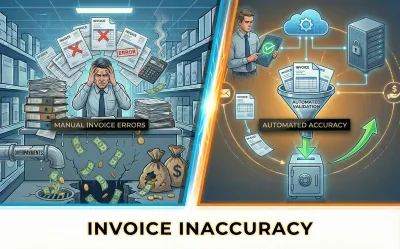
Separate invoice mistakes from money lost
An invoice can contain a wrong quantity, price, allowance, tax, or freight charge. That is a reason to investigate, but the percentage of invoices with an error does not tell you the percentage of supplier spend lost. An error may be small, favorable to the store, corrected before payment, or duplicated in another estimate.
Start with the receiving record, purchase terms, and supplier invoice. Record the disputed amount, correction or credit, and eventual payment. Measure actual unrecovered overpayments separately from exceptions caught before payment.
An illustrative loss calculation
This example uses assumptions, not an industry benchmark or a UniSight customer result: annual sales of $37 million, supplier spend of $27.7 million, and net profit equal to 1.7% of sales ($629,000).
| Assumed unrecovered overpayment rate | Calculation | Illustrative annual cost |
|---|---|---|
| 0.5% of supplier spend | $27,700,000 × 0.005 | $138,500 |
| 1.0% of supplier spend | $27,700,000 × 0.01 | $277,000 |
| 1.5% of supplier spend | $27,700,000 × 0.015 | $415,500 |
These dollar rates are independent assumptions. They cannot be inferred from a claim that 3–6% of invoices contain errors. Recovering $277,000 would equal about 44% of the assumed $629,000 starting profit before implementation costs, taxes, and other changes. Recovery is not guaranteed.
Keep the cost categories separate
- Overpayments: amounts actually paid above the agreed terms, less recovered credits.
- Fraud: confirmed losses, with any overlap with overpayments removed.
- Processing: staff time and operating expense used to receive, reconcile, approve, and pay invoices.
- Price delay: a separate estimate of margin effects after cost changes; compare with the hourly margin model.
Do not add a detected discrepancy, a credit received, and a prevented overpayment as three savings from the same invoice.
A practical review workflow
- Match quantities against goods received, including shortages and substitutions.
- Compare unit costs with purchase terms and applicable allowances.
- Assign exceptions to a named person before payment.
- Track supplier credits through settlement.
- Review recurring exceptions by supplier and cause.
Evaluate accounting and invoice workflows with representative invoices, including unusual cases. Confirm the actual import, matching, and approval scope in a demo. Automation can support this process; it does not replace review of unresolved exceptions.
When costs change, coordinate the approved checkout price and shelf label. Accurate invoices are useful only when the correction reaches the operational decision.
Review the current workflow
Discuss the available product scope and fit using representative records from your store.
Request a Demo