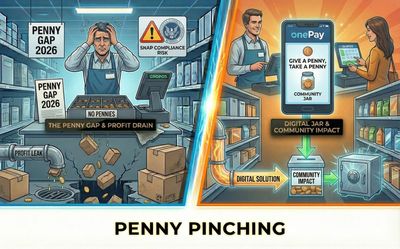
Penny availability and exact prices
The U.S. Mint's penny FAQ says circulating penny production has been suspended and existing pennies remain legal tender. Production changes do not by themselves determine an individual retailer's rounding policy.
A grocer needs a checkout procedure that staff can explain, customers can understand, and the store can reconcile. Check applicable rules before changing cash settlement, particularly for mixed tenders, taxes, refunds, and SNAP transactions.
Measure the cost at your store
As an illustration, rounding down 1,000 cash transactions by an average of two cents costs $20. At that same assumed volume and average for 365 days, the cost is $7,300. This is arithmetic, not a national loss estimate; your transaction distribution and operating days will differ.
Log rounding separately from discounts, donations, and change due. Reconcile the tendered amount against the receipt and drawer so a small change policy does not become an unexplained cash variance.
SNAP requires a separate review
7 CFR § 278.2(b) requires equal prices and terms for eligible food paid for with SNAP and cash, with its stated tax exception. That provision does not certify a digital jar or establish a product-specific safe harbor.
Confirm the treatment of EBT benefits and the cash portion of a split payment with the appropriate program and legal advisers. Do not infer that unchanged item prices alone establish compliance with every applicable rule.
A voluntary digital jar: design considerations
A digital version of “give a penny, take a penny” is a workflow concept discussed here. This article does not establish that a onePay Digital Jar is available in your deployment. Ask UniSight to confirm current availability, payment scope, and terms before planning around it.
- Explicit choice: make donation or rounding choices understandable and voluntary; record the customer's selection.
- Tender separation: distinguish cash change from benefits, card payments, refunds, and store credit.
- Clear records: identify change due, any contribution, its destination, and how settlement will be reconciled.
- Charity administration: confirm recipient authorization, remittance, reporting, fees, and responsibility before offering a program.
- Exception handling: decide how staff handle declined contributions, insufficient coin inventory, and transaction reversals.
What to confirm in a checkout demo
Bring representative cash and mixed-tender receipts to a GroPOS checkout discussion. Review how prices, taxes, tenders, and change are recorded. Use item and price records and the accounting workflow to check the downstream reconciliation.
Software can support an approved policy. No checkout feature guarantees legal compliance or a particular savings result.
Review the current workflow
Discuss the available product scope and fit using representative records from your store.
Request a Demo