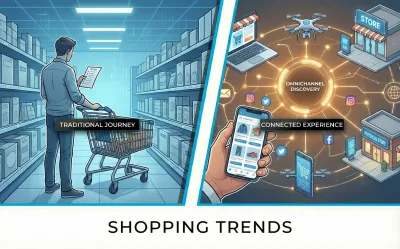
The surge of online grocery shopping

How the pandemic permanently changed American grocery shopping habits

12.5%

Current online grocery market penetration (2024)

$228B

Projected U.S. online grocery sales for 2025

61%

U.S. households buying groceries online (mid-2025)

The COVID-19 pandemic dramatically accelerated the adoption of online grocery shopping in the United States. Starting in 2020, consumers who had been wary of buying food online—especially fresh items—suddenly embraced e-commerce out of necessity. At the pandemic's peak, tens of millions of Americans purchased groceries online for the first time.

Key finding: Online grocery has firmly established itself as a mainstream shopping channel. By 2024, online grocery penetration reached 12.5% of total grocery sales, with projections showing growth to 13.8% by the end of 2025. This represents a dramatic increase from the 8.8% penetration rate in 2020.

U.S. online grocery sales reached approximately $204 billion in 2024, marking an 11.5% increase from the previous year. For 2025, sales are forecast to reach $228 billion, with continued double-digit growth expected. By mid-2025, over 148 million Americans—representing 61% of U.S. households—had purchased groceries online.

Looking ahead, industry projections vary but consistently show strong growth. Some analysts forecast the online grocery market reaching $327-364 billion by 2026, potentially accounting for 20% of total grocery sales within the next few years. The post-2020 era has cemented e-commerce as an integral channel for grocery retailers, even as physical stores retain the majority of sales.

Categories shifting from in-store to online

Not all grocery departments have moved online equally

Center-store and nonperishable goods continue to see the largest shifts to online purchasing. Recent data shows that packaged foods and household essentials dominate online grocery baskets, though fresh and perishable goods are catching up rapidly.

Online adoption by category (2024-2025)

Percentage of online shoppers who purchase each category online

Nonperishable packaged foods
78%
Soft drinks & beverages
67%
Fresh foods (produce, meat, dairy)
61%
Staples & cooking essentials
34%
Breakfast & dairy
24%

Major market shift: Fresh and perishable goods now command 41% of online grocery market share in 2024, demonstrating significant consumer trust in cold-chain logistics and delivery quality. This represents a dramatic increase from earlier hesitancy about buying fresh items online.

Meanwhile, packaged and convenience foods are projected to grow at a CAGR of 19.6% through 2030, as these categories benefit from easy storage, long shelf lives, and the convenience of bulk ordering.

Continued growth vs. return to stores

The omnichannel reality of post-pandemic shopping

Online momentum continues strong

Online grocery sales are growing at nearly five times the rate of in-store sales. Recent data shows online CPG and food sales grew approximately 10-12% year-over-year in 2024, compared to just 1-2% growth for in-store sales. This disparity highlights the continued shift toward digital grocery shopping.

The momentum shows no signs of slowing. Monthly online grocery sales have consistently exceeded $9.5 billion since mid-2024, with record-breaking months reaching over $11 billion. August 2025 marked the first time monthly online grocery sales surpassed $11 billion, driven by increased user engagement and larger basket sizes.

The omnichannel consumer

Despite robust online growth, brick-and-mortar stores remain central to grocery shopping. Physical stores still account for approximately 83% of U.S. grocery sales in 2024. More importantly, the vast majority of online grocery shoppers continue to shop in physical stores as well.

Critical insight: Modern grocery consumers are omnichannel by nature. In 2023, 82% of American households purchased groceries online over a three-month period, yet most continued regular in-store shopping. Consumers strategically use online for convenience and stock-up trips, while preferring in-store for immediate needs and fresh product selection.

Shopping behavior increasingly varies by fulfillment method: 45% of online shoppers prefer home delivery, while pickup services are rapidly growing and expected to account for more than half of online grocery sales by 2027. The average online grocery order is $112—162% higher than the average in-store transaction of $42.83.

Demographics and income effects

Who is buying groceries online?

Income and affluence matter significantly

Income remains a strong predictor of online grocery adoption. Recent data shows that 35% of online grocery shoppers come from high-income households (over $100,000 annually), and 36% of consumers in this bracket prefer online shopping over in-store. In contrast, only 26% of lower-income consumers (under $50,000) prefer online grocery shopping.

26%

Lower-income households preferring online (<$50K)

28%

Middle-income households preferring online ($50-99K)

36%

Higher-income households preferring online ($100K+)

This income gap reflects both access and priorities. Higher-income shoppers are more willing to pay delivery fees and prioritize time savings, while lower-income shoppers often remain more price-sensitive. However, the gap is narrowing as delivery services become more affordable and widespread.

Age: younger generations lead adoption

47%
Shoppers under 40 who have purchased online
22-29%
Shoppers over 55 who have purchased online

Age is one of the strongest demographic predictors of online grocery adoption. Younger consumers (18-39 years) are significantly more likely to shop online than older generations. Specifically, 18- to 34-year-olds are 183% more likely to grocery shop online monthly than shoppers aged 55 and older.

  • Gen Z and Millennials: Leading the charge with 60% of U.S. millennials buying groceries online in recent months
  • Gen X (35-54 years): 41% order groceries online at least once per month—the highest frequency of any age group
  • Baby Boomers (55+): Lower adoption but growing, especially among those who adopted during the pandemic

Family matters: Having children significantly increases online grocery adoption. 61% of online grocery shoppers have kids, and households with children spend 41% more on groceries than those without. Shoppers with minor children are 168% more likely to buy groceries online monthly, driven by time constraints and convenience needs.

Education also correlates with adoption

Education level strongly predicts online grocery shopping. Those with advanced degrees show a 26% likelihood of shopping online, compared to 10% for those without a high school diploma. This gap reflects both digital literacy and income correlations with education.

Large vs. small grocers in the online shift

Different scales, different strategies

Large grocery chains

29%

Walmart's U.S. online grocery market share (2024)

$58.9B

Walmart's 2024 online grocery sales

Top Online Grocers (2024):

  • Walmart: 29% market share, $71.3B projected for 2025
  • Amazon: 22% market share, $43.8B projected for 2025
  • Instacart: 21.6% market share, $37.4B projected
  • Kroger: 9.9% market share, $20.2B projected
  • Target: 4.8% market share

Characteristics:

  • Sophisticated fulfillment infrastructure
  • AI-powered inventory management
  • Same-day and instant delivery options
  • Proprietary apps with personalization
  • Strong subscription programs

Small & regional grocers

~5%

Combined market share of smaller players

$35-50

Average online basket size (smaller than large chains)

Challenges:

  • Limited technology infrastructure
  • Difficulty competing on price
  • Higher fulfillment costs per order
  • Dependence on third-party platforms
  • Thinner profit margins

Strategies:

  • Partnership with Instacart or Shipt
  • Focus on local and specialty products
  • Emphasize personal service
  • Turnkey e-commerce platforms
  • Curbside pickup prioritization

Market concentration: The top three players—Walmart, Amazon, and Instacart—control approximately 73% of the U.S. online grocery market. This concentration makes it challenging for smaller grocers to compete on price and convenience alone.

Looking forward, small grocers are increasingly adopting specialized strategies: emphasizing locally-sourced products, organic options, and personalized service to differentiate from larger competitors. Many are also exploring subscription models and enhanced loyalty programs to build customer retention.

The future is omnichannel

Key takeaways and what's ahead

The post-2020 landscape of grocery shopping in the United States is one of blended channels and evolving habits. Online grocery has transitioned from a niche service to a mainstream shopping method, with over 148 million Americans (61% of households) purchasing groceries online by mid-2025. Yet physical stores remain central, demonstrating that the future is truly omnichannel.

Key findings

1. Explosive growth continues – Online grocery sales reached $204 billion in 2024 and are forecast to hit $228 billion in 2025, representing market penetration of 12.5-13.8%

2. Fresh foods are now mainstream online – Fresh and perishable goods command 41% of online grocery market share, showing dramatic consumer trust in delivery quality

3. Demographics shape adoption – Younger consumers (18-39), higher-income households ($100K+), and families with children lead online adoption, though all groups are growing

4. Market concentration is high – Walmart (29%), Amazon (22%), and Instacart (21.6%) control nearly three-quarters of the online grocery market

5. Physical stores remain essential – 83% of grocery sales still happen in-store, and most online shoppers also shop physically for immediate needs and fresh product selection

The bottom line:

Online grocery is growing at nearly five times the rate of in-store sales (10-12% vs. 1-2% annually), yet the channels work together rather than compete. Consumers strategically use online for convenience, larger stock-up orders, and time savings, while in-store shopping provides immediate access, product selection flexibility, and the tactile experience many still prefer for fresh items.

By 2027, online grocery could represent 20% or more of total grocery sales, reaching $327-422 billion depending on the forecast. But brick-and-mortar won't disappear—it will evolve to complement digital channels.

The future of grocery is omnichannel, where consumers seamlessly use both online convenience and in-store immediacy to suit their needs. The retailers who succeed will be those who integrate both modes effectively, offering pickup, delivery, and in-store options with consistent pricing, inventory, and personalized experiences across all channels.

Data sources: Oberlo, Capital One Shopping, NielsenIQ, Brick Meets Click, Mercatus, Mintel, Grand View Research, Mordor Intelligence, USDA Economic Research Service, Statista, and other reputable market research firms (2024-2025 data)

Ready for the omnichannel future?

UniSight helps independent grocers compete with unified data and AI-powered insights.

Request a Demo